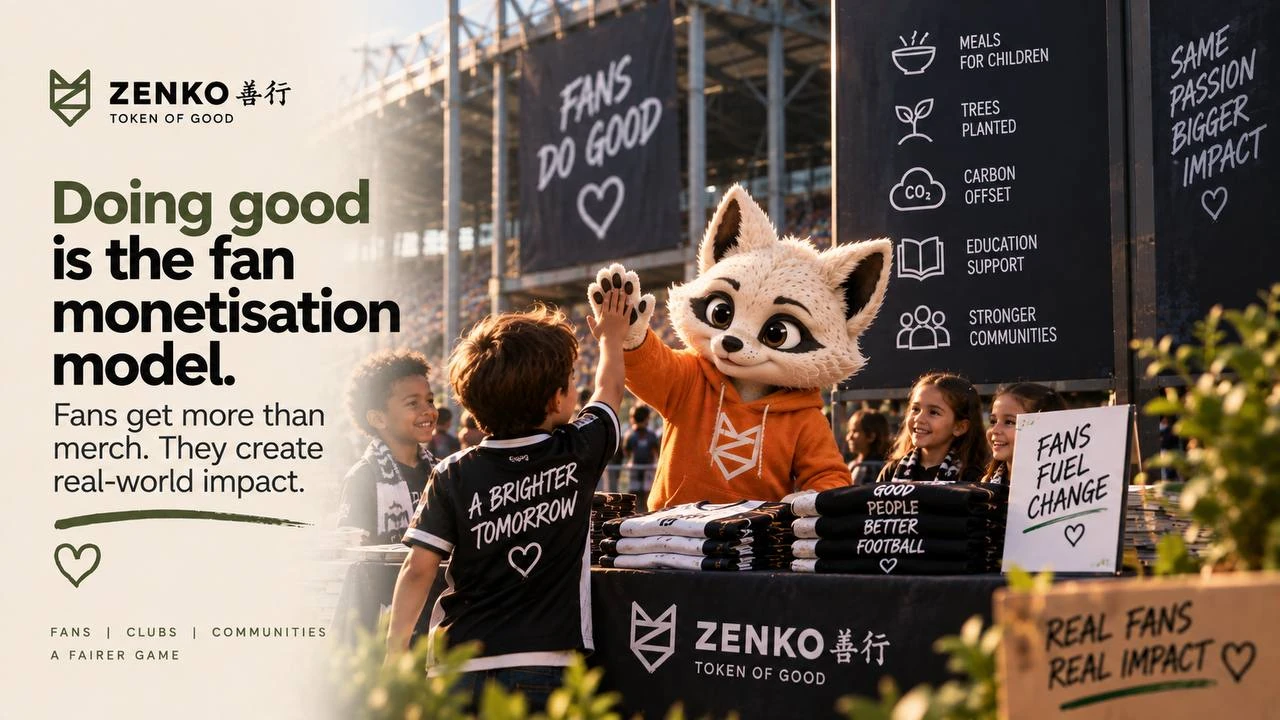
Cause is the reason three parties say yes at the same time. Sponsors fund an impact pool because they get a verified outcome they can report. Fans identify themselves because directing that pool through a prediction round, a movement target or a shirt is worth putting a name to. The club gets the identity, the revenue share and a community story it can stand behind. Impact is counted in meals, and the fan directs it; the sponsor has already paid for it.
The moral anchor
The money in football pools at the top. Global media rights reached $62.61bn in 2024 (SportBusiness). About £100m a year reaches the 72 EFL clubs. The Premier League's long-standing pledge to put 5% of broadcast revenue into the grassroots game is, on written evidence to Parliament, unmet Where does Premier League TV money go? Not far down the pyramid. The towns around lower-league clubs are also where community need concentrates, and the club is very often the institution those towns trust most.
That is a moral argument, and on its own it has not moved the money. What has started to move it is the commercial argument underneath.
The sponsor is already moving
Sponsorship is the largest revenue line for elite clubs, at 44% of Money League revenue (Deloitte, 2025 edition), and it is the one stream that flows directly to rights holders. It is also changing shape, from exposure to measurable outcomes: a sponsor now wants to report what its money did Fan engagement is a first-party data problem. A meal delivered because a fan hit a movement target is an outcome. A logo on a hoarding is not something anyone can count.
Two principles make the impact layer work commercially. External capital enters before rewards leave, so the pool is funded before a single fan is asked to do anything. And the sponsor pays for verified outcomes, so the club is selling something the sponsor can audit.
How the impact layer works
The sponsor pre-funds the pool. Fans direct it. A completed prediction round, a movement target reached, a shirt bought: each one moves part of the pre-funded pool to an outcome, and the fan can see which one.
The framing matters and we are careful with it. Nobody creates a meal by tapping a screen. The sponsor created it by funding the pool. The fan decides where it goes, and that decision is what they put their name to. That framing keeps the impact claim honest, it keeps the delivery cost predictable, and it is why we count impact in meals delivered and never in money raised. Anything environmental, trees or carbon, follows the same rule and is worded to the standard the CMA expects of a green claim.
Relegate Hunger at MK Dons
The live case is Relegate Hunger. At MK Dons, shirt purchases funded meals for children in food poverty through Surplus to Purpose: 2,000 meals delivered through four community hubs in Milton Keynes. The full case study is here re:Hunger case study; this article is about why it worked commercially.
Shirt buyers claimed the collectible, which is how the club learned who bought. The sponsor reported meals. The community saw the receipt. Three yeses from one purchase, and an identity the club owns at the end of it Fanatics made $8.1bn. The league got 6 to 8% of the shirt.
Why this is the model
Strip it back and the impact layer is the thing that answers all four of the questions in this series at once. It gives the fan a reason to identify themselves Fan engagement is a first-party data problem. It gives the club a revenue line per engaged fan. It gives the sponsor a funded, auditable outcome. And because the sponsor money arrives at activation, it is the fastest part of the programme to get moving once the club's guarantee is underwritten Why fan engagement projects stall at clubs, and what a minimum guarantee changes. The order to run it in is here A 90-day plan to give your club a fan revenue line.
FAQ
How do football clubs fund community work? Traditionally through club foundations, grants and matchday collections. The model here funds outcomes from a sponsor's pre-funded impact pool, directed by fans, and reports them in units delivered.
What is cause marketing in sport? A sponsorship where the brand's money is tied to a social or environmental outcome the fan can see, in place of exposure alone.
Do fans engage with charity campaigns at clubs? At MK Dons, shirt buyers claimed the digital collectible attached to their purchase and the programme delivered 2,000 meals. We publish results from live programmes only.
What is Relegate Hunger? A Zenko food poverty programme anchored by an MK Dons partnership, in which shirt purchases fund meals for children through Surplus to Purpose.