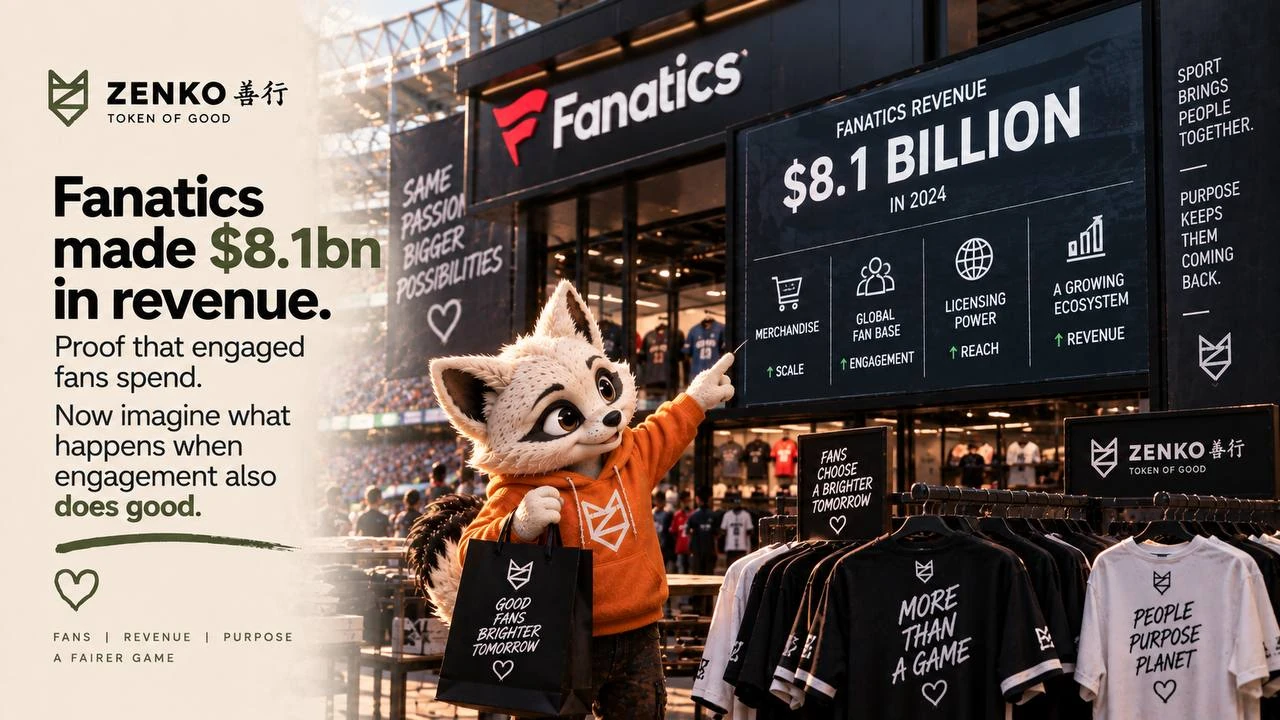
Fanatics generated $8.1bn of revenue in 2024, up 15% on the year, according to its CFO Glenn Schiffman speaking to Sportico in January 2025. Under its licensing model, leagues and partners receive roughly 6 to 8% of retail sales. The number that matters more than the royalty is the one on the customer file: Fanatics can name more than 100 million sports fans. The average rights holder can name about one in four of its own.
How Fanatics makes its money
Three segments. Fanatics Commerce, the merchandise business, brought in about $6.2bn, or 77% of the total. Fanatics Collectibles, built on the Topps acquisition for about $500m in 2022, brought in about $1.6bn, or 20%, up 40% on the year, with EBITDA margins above 20%, which makes trading cards the highest-margin thing the company does. Fanatics Betting and Gaming brought in about $300m, or 3%.
The company was valued at about $25bn in a 2024 employee share sale, down from a $31bn peak in 2022, though a November 2025 Fidelity mark implied about $33.5bn. It is targeting about $13bn of revenue in 2026 with a long-term ambition of $30bn to $50bn. In trading cards, Panini holds about 40% of the market and Topps, now Fanatics, about 30%.
What the rights holder receives
Roughly 6 to 8% of retail sales, under the licensing model. The leagues' answer to that was to buy in: the NFL, MLB, NHL, MLS and the NFL Players Association all hold equity in Fanatics, which is an unusually direct way for rights holders to participate in an intermediary's upside. It is also an answer that is only available to a rights holder with that kind of leverage. A League One club does not get equity in its kit supplier.
The resale leak, briefly
Tickets tell the same story in a different aisle. The global ticket resale market is estimated at roughly $15bn a year, more than double its size a decade ago, according to industry analysts cited by the Boston Globe in March 2026, which also reported that for many high-demand events most tickets move into resale channels within minutes of going on sale. Other estimates are lower, around $3.4bn for 2024, on narrower definitions. Either way the spread between face value and resale price goes to the platform, and legislative caps being debated from California to Massachusetts are contested by economists who argue they push transactions off-book. Club-controlled resale is the mechanism that recaptures the spread, and it only works if the club knows who its buyers are.
The asset is the name
Put the two numbers side by side. Fanatics: 100 million identified fans. The average rights holder: about 24% of its audience identifiable by name and contact (Dizplai Anonymous Fan Index, January 2026). The shirt purchase is the highest-intent moment a club has with a supporter, and at most clubs it happens in a third-party shop, through a third-party checkout, and the club learns nothing about who bought it.
Shop for Good inverts that moment. Every shirt comes with a free digital collectible. The buyer claims it, which is where the club captures the identity at the point of purchase, and the purchase funds meals for children in food poverty. At MK Dons that has meant 2,000 meals delivered through four community hubs in Milton Keynes re:Hunger case study. The collectible is earned by buying something the fan was going to buy anyway, it is fixed in supply, and it is tied to an outcome, which is the design the digital collectibles crash taught everyone Fan tokens fell 96%. What actually survived the digital collectibles crash. The people most likely to claim it are the buyers clubs are currently losing to platforms Who is buying sports collectibles now, and why it matters for your club.
FAQ
How much do clubs make from shirt sales? Under a typical licensing model, leagues and partners receive roughly 6 to 8% of retail sales (Sportico, January 2025, on Fanatics). Clubs with their own retail operations keep more, and learn who bought.
How much revenue does Fanatics make? $8.1bn in 2024: about $6.2bn commerce, $1.6bn collectibles and $300m betting and gaming (CFO Glenn Schiffman to Sportico, January 2025).
How big is the ticket resale market? Roughly $15bn a year globally on the wider definition (analysts cited by the Boston Globe, March 2026), or around $3.4bn on narrower ones.
What is Shop for Good? A Zenko product that attaches a free digital collectible to a club shirt. The buyer claims it, the club learns who bought, and the purchase funds meals through a partner charity.